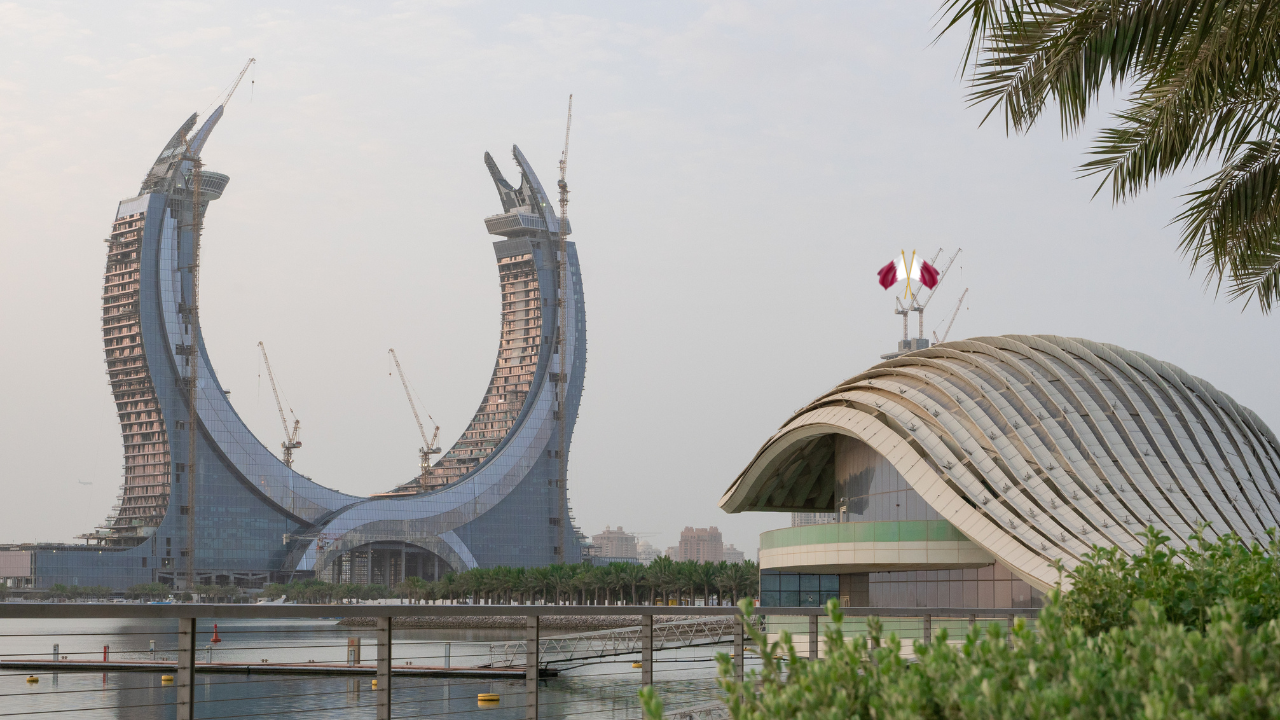
Lusail Qatar is the boldest urban development project which is a complete master-plan, smart city which is set to be an economical, cultural, and social center of the 21st century. It is located approximately 15-24 km north of Doha, on the Persian Gulf coast, and covers approximately 38 sq km, and is projected as home to some 200,000 residents, 165,000 professional workspace, and tens of thousands of visitors.
- Birth and Planning Vision
- Geography and Layout
- Infrastructure and Connectivity
- Planning and Smart City Characteristics
- Financial Center and Investment Fraud
- Culture, Tourism and International Recognition
- Social and Lifestyle Dynamics
- Sport and Entertainment Facilities
- Challenges and Future Prospects
- Plan your Next Trip to Lusail Qatar and See How Advance It is
This city is at the centre of Qatar National Vision 2030, the long-term development strategy of Qatar that aims at diversifying its economy through other means other than oil and gas, such as knowledge and industries, sustainability, and international excellence. The infrastructure has high-quality transportation (metro, trams, water taxis), high-tech amenities, and IoT infrastructure.
Within 13 years since its creation in 2005, the city has developed very fast, as a host to big events such as the 2022 FIFA world cup final in Lusail stadium, and as the Islamic Capital of Culture in the year 2030, which symbolizes its developing influence in the region.
Birth and Planning Vision
The vision was never small and limited but something which will be great and have a huge impact.
A Projected Metropolis of Design
It is not an organic city, but a designed city that is a creation of the strategic planning of Qatar. Qatari Diar is the state-owned developer of real estate that was founded by the Qatar Investment Authority, and initiated the project in 2005. It was mandated to facilitate the growth of Qatar and diversify its economy by building up the city.
The Master plan of the city reflects the aspirations of Qatar National Vision 2030 which is a plan that seeks to put the country off its reliance on hydrocarbons and into a knowledge-driven economy and sustainable development. The development is directly related to these larger national ambitions, as it provides an opportunity to invest, innovate and become connected with the world.
Geography and Layout
Uniqueness Waterfront Urbanscape
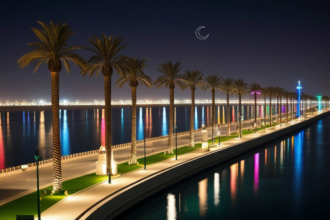
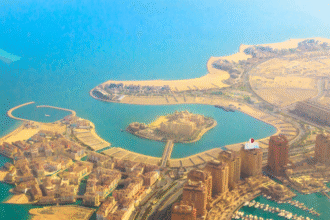
Lusail is situated on the peninsula of Qatar which is on the North coast of the country and covers roughly 38 square kilometers, that is, the size of a small city state.
The city fabric is planned in 19 multi purpose districts mixing residential, commercial, entertainment, education and hospitality areas. These include:
- Two waterfront promenades and recreational marinas.
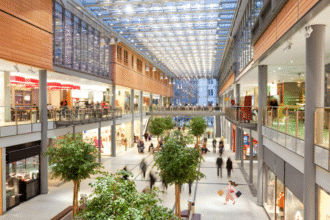
- Mixed-use residential-commercial-hotel-shop developments.
- Urban parks such as Crescent Park and Wadi Park were also green.
- Mosques, schools, health facilities and community facilities.
This is mixed land use that is supposed to develop self-sufficient neighbourhoods in which individuals do not need to commute to work, live, and play.
Infrastructure and Connectivity
Transport Networks| Sustainable and Integrated
Transportation is one of the characteristics of this city. To establish connectivity within the city as well as to larger Doha:
- The Doha Metro Red Line links this place to the central location of Doha and international transit lines.
- The tram system with several lines and dozens of stations connects the main districts as well as connecting to the metro by facilitating easy urban transportation without personal cars.
- The plan is associated with walks, bicycle lanes, water taxis, and park and ride-lands – in accordance with the requirements of sustainability, multi-modality and walkability.
Planning and Smart City Characteristics
More Than a City A Smart Ecosystem
It is a smart and eco friendly city model and has adopted new technology and environmental friendly systems:
- It has a high-speed fiber-optic, city-wide network that provides high-speed communications, public Wi-Fi, and IoT.
- The district cooling systems (one of the largest in the world) are large-scale systems which save significantly on energy usage and emissions as opposed to the usual systems.
- The standards of sustainable buildings (QSAS, GSAS) guarantee the efficient utilization of energy and materials recycling as well as good exterior conditions.
- Technologies in waste management, such as underground vacuum pipelines, ease the traffic and improve the effectiveness of the sanitation system.
All these elements are indicative of the desire of the Lusail city to be a role model to the other cities in the world in future.
Financial Center and Investment Fraud
Business, Finance and Real Estate
This city is planned as a residential city, cultural city, commercial city and financial city:
- It has been designated by plans as the financial services centre, where banks, fintech and professional services are likely to be found.
- New economic projects such as a 1 billion investment incentive programme are also aimed at attracting companies to set up offices in the financial sector of the city.
- The real estate market has freehold property opportunities to foreign investors, which is a fairly new policy in Qatar and allows non-Qataris to purchase property in the prime districts.
This set of policies is expected to put it at a higher investment destination, supporting the diversification initiative of Qatar.
Culture, Tourism and International Recognition
World Cup Culture and Culture Pride
International fame came to Lusail when the city hosted the 2022 FIFA world cup final in Lusail stadium, a historic venue with a seating capacity of almost 90,000 people.
In addition to sport, this eco-friendly city became the Capital of Islamic Culture 2030, which indicates the fact that the city is becoming a cultural lighthouse in the Islamic world.
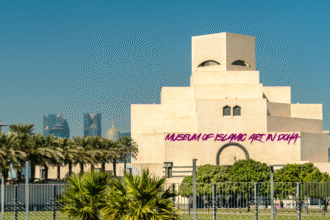
The Lusail Museum is also planned to be built in the 2020s and serve to supplement the cultural diversity of the city and ensure its attraction of international audiences.
Social and Lifestyle Dynamics
Miscellaneous Experience and Urban Life
The contemporary infrastructure and stunning waterfronts are the reasons why this city is desirable to both residents and visitors. It has a variety of urban experience because of its boulevards, parks, sports and shopping areas.
According to some of the local observers, the city is not as naturally built-up as older urban neighbourhoods, and there is a difficulty in developing a sense of community.
These perspectives underscore why it is difficult to establish not only infrastructure, but also liveliest inhabited societies.
Sport and Entertainment Facilities
Beyond Urban Living
This well planned city offers a great number of facilities outside of Lusail Stadium:
- The sports arena is one of the largest indoor facilities used in basketball, handball, and cultural shows with a capacity of over 15,000 people.
- The broader area around Lusail boasts of such motorsport amenities as the International Circuit, the host of MotoGP, Formula 1 and endurance events.
The facilities enhance the destination of world sporting and entertainment events.
Challenges and Future Prospects
Urban Development and Market Relations
The grandiose nature of Lusail and its grand ambitions also has its difficulties:
- The property markets that are in early development stages are rather sluggish to mature as some houses may be left vacant until the demand catches up.
- Off-peak business may be disproportionate, especially in the case of the retail and hospitality operators.
- Although these are short-term problems, it can be concluded that the long-term prospects of Lusail are good owing to the strategic value and the sustained governmental support of the institution and the growth in tourism in the region.
As Qatar aims to increase its number of tourists to 6-7 million a year by 2030, attractions, transport infrastructure and luxury infrastructure will be a major beneficiary of this development.
Plan your Next Trip to Lusail Qatar and See How Advance It is
This eco-friendly city is a representation of the aspirations of Qatar – to create a modern, sustainable, smart, and globalized city. It is through its waterfront areas and its legendary stadium to its super-modern transport network and cultural projects that this city offers a classic example of how strategic planning can transform the city life.
Still social and economically developing, infrastructure, investment policies, and the global image will guarantee that it will be the center of Qatar development and diversification. It will also impact not only the Gulf region, but also urban planners all over the world trying to find a blueprint of sustainable, integrated cities of the future.