Jebel Hafeet is a calm desert mountain a little way from Al Ain, close to the border of the UAE and Oman. At 1,240 meters, it is the highest point in Abu Dhabi and the second tallest in the UAE. Jebel Hafeet is not just a nice background; it on one hand has natural attractiveness and on the other hand is loaded with history.
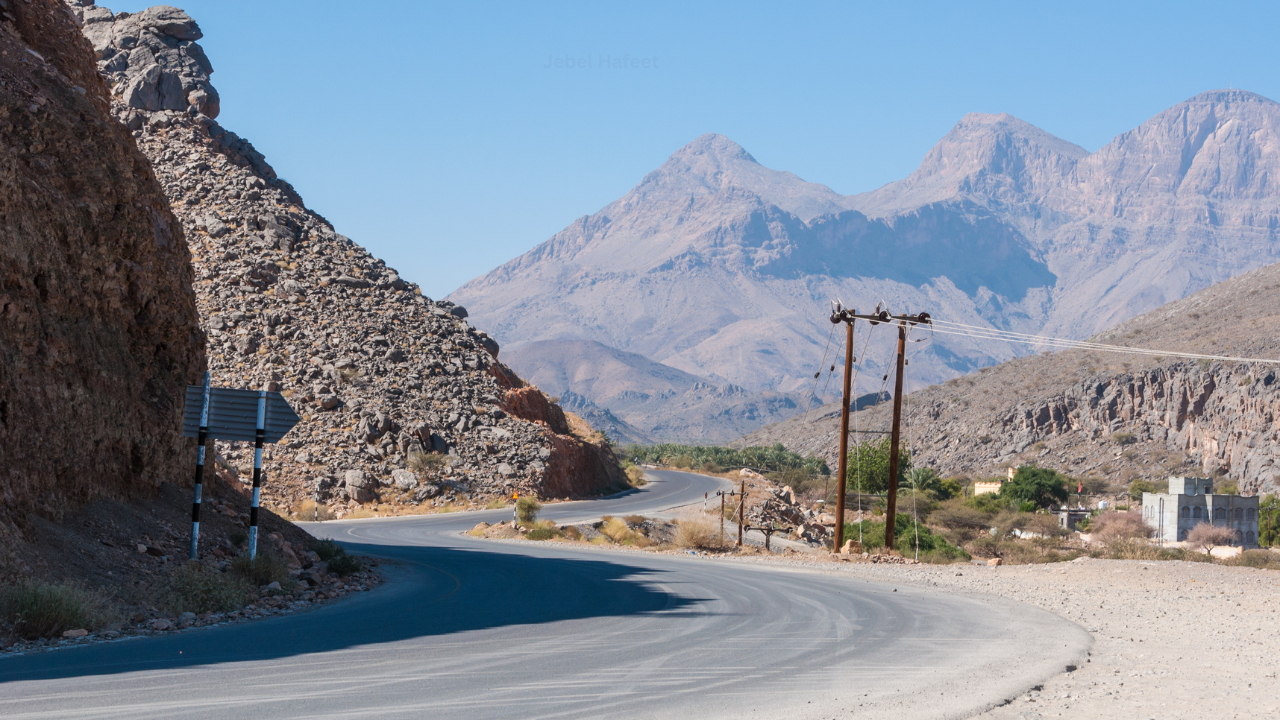
At its foot are the old stone tombs, whereas the luxuriance that surrounds it fueled by the natural hot springs brings the desert back to life. This is a 11.7-kilometer straight road; it has about 60 curves going up to the peak where the ride turns into a wild adventure. Mount Hafeet is a natural skyscraper in the city, overlooking Al Ain, and it is hard to find such a place with such views, picnic spaces, and sunsets too, so it gives tourists a true city retreat.
But what truly makes Mount Hafeet special is not just the view from the top it’s the journey through history, nature, and quiet desert beauty that unfolds with every turn of the road.
| Feature | Detail |
| Location | Al Ain (Tawam region), Abu Dhabi, UAE; UAE–Oman border |
| Elevation | ~1,240 m (4,070 ft) |
| Mountain Range | Outlier of the Al Hajar Mountains |
| Coordinates | 24°03′31″N, 55°46′39″E |
| Cultural Importance | Bronze Age “beehive” tombs (Hafit Period, UNESCO) |
| Protected Area | Jebel Hafeet Desert Park |
| Access | Paved road, open year-round, no entrance fee |
| Facilities | Parking, cafés, Mercure Grand Jebel Hafeet Hotel |
| Nearby Attraction | Green Mubazzarah Park (hot springs & picnic areas) |
History and Culture of Jebel Hafeet
This mountain is not only a rock; it has a rich past. People buried their dead in the round, stone graves that were like beehives at Mount Hafeet almost 5,000 years ago. These kinds of tombs mark the beginning of the so-called Hafit Period (3200–2600 BCE), which was named after the mountain.
In the 1950s, the excavation revealed ancient pottery containing copper metal that could be traced to Mesopotamia, Iran, and the Indus Valley. As a result, it was recognized that Al Ain was a significant trading center in the past. Because of this, it was added to the list of the UNESCO World Heritage sites in 2011
These old round tombs, among the oldest in the region, are hidden under the desert sand. When you go among them, you can feel how long they have been there. At present, the area is a Desert Park, a place which protects its flora and fauna and, of course, its charm. The Mubazzara Dam is a nearby alternative opened in 1955 by Sheikh Zayed. Namely, the mountain not only passed through old tribes to the UAE’s present-day history.
Geography, Geology, and Location of Hafeet Mountain
Geographic Location and Setting
This high mountain stands out in the view from Al Ain. It lies on the border between the UAE and Oman and is part of the Eastern Hajar range, but most of the mountain is in Abu Dhabi. In the north, aside from the deserts, the city of Al Ain is spread out and close to the Omani town of Al Buraimi.
It’s the exact spot at 24.0586, 55.7775, at the south edge of Al Ain, near the E40 highway. If you take a look at a map of Al Ain, you will see the mountain’s long top stretching all the way down, with its light limestone sides radiating out, forming the large field.
Geological Formation and Structure
Mount Hafeet was initially a coral reef that was uplifted over time. The rocks that form the mountain consist primarily of limestone and marl. These were formed when the area was covered by a shallow sea back in the Eocene and Miocene eras.
Look really carefully, and you can still see the shells of corals, shells, and some microorganisms in the clastic rocks. These were actually the residents of Tethys Sea that were standing here. Crossing these mountains is like crossing the bottom of an ocean that flourished millions of years ago. The mountain is the product of the Mount Hafeet Anticline, an anticline where strong earth movements shaped it.
Elevation, Views, and Natural Landscape
The mountain is located about 900 to 1,000 meters above the flat land nearby. A road with a beautiful view that climbs to 1,200 meters over 11.7 kilometers is one of the most exciting drives in the area. It is not only steep but also very winding, and it is one of the most exciting drives in the area.
Since the top is isolated, it has numerous vistas. When the sky is clear, you can see every nook and cranny around Al Ain, the distant Hajar Mountains, clouds beneath you, and even the hills in Oman. This provides a true-blue view of Eastern Arabia from the sky.
Green Mubazzarah and Mountain Ecology
At the mountain’s base, the Green Mubazzarah area appears as a green band against the rugged backdrop. The mountain’s form influences the area’s fertility. The warm water pours up from the ground through the natural hot springs, which are the provisions for the lawns, gardens, and pools of the area.
The lower part of the hill is covered by this continuous source of water, so that palm trees and grass grow in stark contrast to the desert. Green Mubazzarah will let you see how the mountain creates life as water runs down it, filtered by the rocks of Hafeet. Dams, chalets, and springs emerge. They are the result of water filtered through its rocks.
Weather and Best Times to Visit
Think of Hafeet as a natural heater. In summer, the hot desert air rises to the top of the hill. The temperature during the day on the summit of the Hafeet Mountain ranges from 40°C (104°F) in July and August down to mid-20s at night. It seems like an oven at every sharp angle you turn. If you go there in summer, it’s better to go early in the morning or late in the evening and bring more water.
Winter at Hafeet Mountain is very cozy and chill, you know. During the dayDuring the day, the temperature is very moderate, around mid-20s°C, and at night it can drop to 10–13°C. At times, it might be colder, and the top part of the mountain will go down to no less than 10°C, while the nearby Jebel Jais can fall to below 5°C.
Precipitation is scarce, almost as infrequent as yearly plant watering, with only 77mm of atmospheric water (Rain) a year, which, although not guaranteed to ward off plants from their wintery soup, mostly occurs during winter and early spring. In spring, the sun shines, and temperatures warm up, and in autumn, the weather is always lovely and calm.
The period from October to April is the best one for Hafeet Mountain to be enjoyed. The days in these months start with temperatures below 30°C, making it easier to enjoy outdoor time. The mist or the chill morning also adds to the mysterious beauty, but it decreases visibility.
Winter storms are rare, but slick roads can make them very dangerous, so driving carefully is a must. Use layered clothing, as the top of Hafeet Mountain is 10–15°C cooler than Al Ain, especially after sunset. Always carry some shades, and a lot of water is a must, even in cooler weather,because of the strong sunlight from the desert.
Typical Monthly Weather at the Summit
| Month | Avg. High (°C) | Avg. Low (°C) | Rain (mm) |
| Jan | 26.1 | 13.0 | 9 |
| Feb | 26.6 | 13.0 | 36 |
| Mar | 29.7 | 13.0 | 11 |
| Apr | 34.6 | 21.1 | 4 |
| May | 38.7 | 25.0 | 0 |
| Jun | 40.0 | 26.7 | 1 |
| Jul | 38.0 | 26.4 | 0 |
| Aug | 36.7 | 25.5 | 2 |
| Sep | 36.5 | 23.8 | 1 |
| Oct | 35.1 | 21.5 | 0 |
| Nov | 31.3 | 17.8 | 7 |
| Dec | 27.9 | 13.0 | 6 |
Things to Do at Hafeet Mountain and Nearby:
It is a mountain for nature lovers, families, and adventure seekers.
Scenic Mountain Drive or Cycle
The 11.7 km road is well known for driving, cycling and motorcycling. There are approximately 60 sharp bends. You can take a picture of yourself at many lookout points on the road. It’s the road open to traffic year-round, with no special permits required.
Viewpoints and Stargazing
The sight of the top of the mountain opens your eyes beyond the boundaries of Al Ain city. It is a marvel of nature that astounds both stargazers and campers who want to use the bonfire for cooking barbecue.
Green Mubazzarah Hot Springs and Park
At the foot of the mountain is a park with hot springs and small, warm pools. There are lawns, picnic spots, and parking available. Entry is free, and the place is a favorite of families.
Historical Sites Nearby
There are more relics to the left and to the right, including a 5,000-year-old tomb. So you can see them quickly. And you can even see the tombs and the castle. For the museum, the city of Al Ain will also offer Al Jahili Fort and Al Ain Oasis to study history and culture.
Hiking and Nature Walks
Informal trails are made at the mountain’s base. Animals are around, and you can also hike for a moment, like “Camel Hill,” one of the local favorites, at least in the cooler months.
Relax at the Summit Cafés or Hotel
Lose stress by having a cup of a cappuccino or whatever your usual is up at the café right beside, or have a great walk and relaxation with the stunning view of Jebel Hafeet at the Mercure Grand Jebel Hafeet Hotel’s terrace.
Photography
Combat the asymmetry between rocks, greenery and mountains, masters say. Click images with unique details like car lights and morning mist.
Comparison with Jebel Jais
A common question is: Which is better—Jebel Jais or Jebel Hafeet?
The truth is, they offer very different experiences.
Jebel Jais, located in Ras Al Khaimah, is the UAE’s highest mountain at 1,934 meters. It’s known for adventure and adrenaline, featuring the world’s longest zipline, high-altitude parks, hiking trails, and camping spots. Thanks to its height, it stays 10–15°C cooler than the lowlands in summer and can drop close to freezing in winter.
Jebel Hafeet, by comparison, rises to about 1,240 meters and has a calmer, more relaxed atmosphere. It’s warmer than Jais, but far quieter. Instead of thrill rides, it offers peaceful drives, expansive desert views, and something unique in the UAE—5,000-year-old Bronze Age tombs at its base.
Think of it this way:
Jebel Jais feels like a high-altitude adventure park, while It feels like a quiet mountain retreat steeped in history. On Hafeet, you’ll pass rocky slopes, wandering goats, and ancient graves. On Jais, you’re more likely to see zipliners flying across deep canyons.
Neither is “better”—it depends on what you want. Choose Hafeet for serenity, sunsets, and archaeology. Choose Jais for adventure, cooler weather, and altitude thrills.
Quick Comparison
| Characteristic | The Al Ain Peak (Hafeet) | Jebel Jais (Ras Al Khaimah) |
| Elevation | ~1,240 m above sea level | 1,934 m (UAE’s highest) |
| Access | Paved two-lane road (60 turns) | Paved highway (zig-zags, 37 km from RAK) |
| Viewpoints | Panoramic valley/Oman views; stargazing | High ridge views; observation decks |
| Activities | Scenic drive, hot springs, hiking, tombs | Zipline, hiking, camping, parks |
| Crowd Level | Moderate (calmer, local) | High (touristy in season) |
| Climate | Desert mountain (40°C max summer; ~13°C min winter) | Cooler (summer ~30°C; winter often <5°C) |
| Special Features | 5,000-year-old tombs; Sheikh Zayed dam | World’s longest zipline; RAK highest park; occasional snow |
Travel Tips and Nearby Free Attractions
Getting There
The best way to get to Green Mubazzarah is to head south on the E40 around the Al Ain Zoo, then follow the signs. The parking space is quite significant during regular times. Only a one-way road up to the mountains is open all year. Use your GPS (24.05 N, 55.78 E) to geolocate towards the hot springs. Dubai to Green Mubazzarah is approximately 160 km, which means it takes about 2 hours to drive.
No Entrance Fee
Bringing a car and driving up the Hafeet Mountain road, you can also enter without paying and, of course, visit the Green Mubazzarah region. It will be a fun activity if you want to hike the mountain road. Besides, there are two picnic areas, one at the top and the other at the bottom of the hill, and of course, there are free hot springs. Payment is required if you want to eat at a café, rent a chalet, or stay at the hotel.
What to Bring
The sun is super bright. So do not forget water, sunscreen, and a hat. In winter, the mornings are foggy and cold, and at night you have to take a light jacket with you. Sharp shoes are recommended for the trek, as stones can be pretty dangerous. Getting some snacks from down can be a good idea, as there isn’t much food available at the top.
Best Photography Times
Sunrises and sunsets offer the best photo opportunities. The east brightens with blue light in the morning, while the west gets its color from the descending sun, touching both desert and city. Besides, nighttime shooting is also a good experience with the cars’ lights and stars.
Free Attractions in Al Ain
While you are traveling around, do not miss these free local options:
- Al Ain Oasis (UNESCO-listed palm groves)
- Al Jahili Fort
- Hili Archaeological Park
- Camel Market
- Falaj Irrigation Museum
These pair perfectly with a mountain visit.
Weather Check
Before you go, check the weather. The fog may suddenly roll in, blocking your view. The temperature at the top of the hills is typically 8 to 10 degrees Celsius lower than in Al Ain city, even more so during winter.