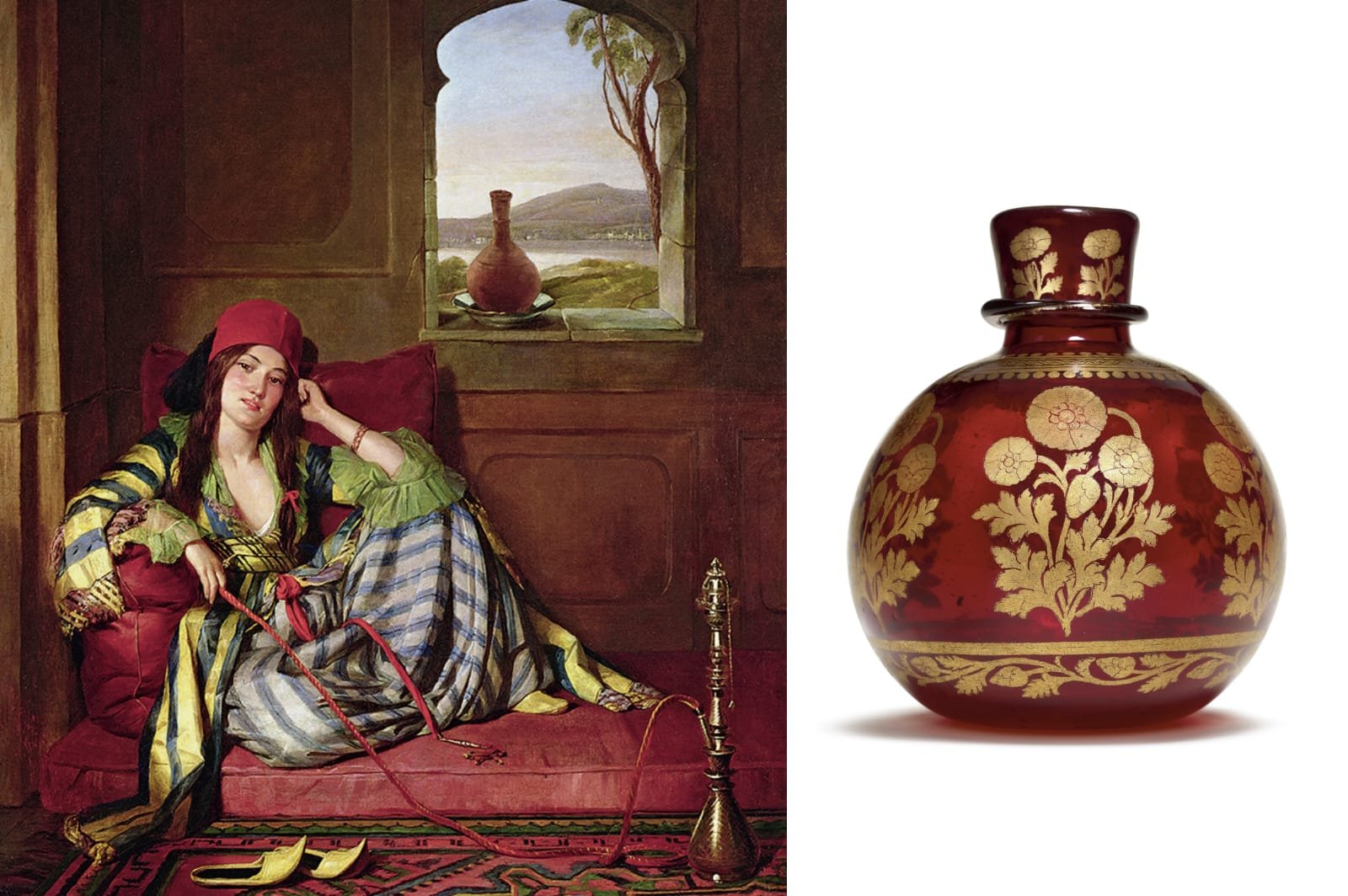
Released in November 2025 within Assouline’s Classics Collection, Mystic Mist The Rituals of HuqqA sets a long-standing tradition against the everyday rhythm of contemporary urban life. The volume, written by journalist Sarah Khan with photography by Oliver Pilcher, guides readers along a cultural route that links diverse regions and historical layers.
The book focuses on the continuity of the ritual across time and on the new forms it adopts in modern cities, using a narrative structure that closely mirrors an in-depth news feature.
Historical Context Anchors The Narrative From The Very First Pages
The publication opens with a quotation from the renowned lines of Fasih Ahmed Dede, establishing the starting point of the historical arc that follows. It describes how tobacco arriving from the New World shaped new rituals among the elite circles of the Mughal and Persian empires, presenting this process through both aesthetic and social lenses.
The transformation of finely crafted sets into indicators of status is traced from palace interiors to the emerging culture of coffeehouses. Readers follow a route that extends from imperial centers into the social life of Europe, through a carefully balanced combination of imagery and text.
A Long-Standing Practice Finds A New Role In Contemporary Metropolises
Rather than confining the ritual to a closed chapter of the past, “Mystic Mist” examines how it is repositioned within the accelerating pace of present-day cities. The book explores how the need to pause briefly, come together and talk, even amid a demanding schedule, brings this tradition back into view.
It underlines that the practice derives its meaning not only from the act itself, but from the shared time and shared setting it creates. The narrative shows how different generations reinterpret the ritual while also reflecting shifts in design language and the architecture of new venues.
In doing so, the work presents the tradition as a living element that interacts with contemporary urban culture rather than as a static relic.
Text And Images Combine To Create The Sense Of A Global Features Story
Author Sarah Khan is recognized for a journalism career spanning multiple countries, particularly for her extensive reporting on travel, fashion and gastronomy. In this project, she adopts a comparable method, situating the ritual within its broader sociocultural framework.
Photographer Oliver Pilcher’s long-standing experience in travel photography is evident in the visuals, which range from intimate interiors to sweeping urban skylines. The editorial contribution of Irem Kınay, who has closely followed publishing initiatives in the region for many years, plays a visible role in shaping the project.
Together, these elements give the book a cohesive form that recalls a meticulously prepared international research file, both in its written voice and its visual language.
The Preface Connects Ottoman-Era Practices With Todays Daily Routines
The book’s preface is penned by HuqqA Board Chair Cihan Kamer. In this introductory section, the ritual’s journey from the era of the Ottoman Empire to the present day is read through the lens of ordinary life.
The preface emphasizes that the practice is not only associated with pleasure, but also stands as a symbol of hospitality, conversation and shared presence. It highlights that, even as cities expand and physical environments change, the need to sit together and reserve time for reflection continues.
Rather than reducing the tradition to a form of short-lived entertainment, the preface frames it within historical and sociological discussions. From this starting point, the book offers readers a broader cultural perspective that reaches beyond any single product or venue.
New Generation Voices Give The Tradition A Contemporary Resonance
Within the book are passages that translate enduring social habits in Türkiye into direct, accessible language for today’s readers. These sections stress that the ritual is not solely a memory kept alive by older generations, but also a way for young people to meet and briefly step away from the intensity of daily routines.
The overall picture presented is of a practice that may appear, at first glance, as “only smoke”, yet in reality provides a setting for conversation and encounter. Through these first-hand accounts, the book shows how the ritual opens up a space of “being present” for contemporary urban residents.
Readers are thus able to understand the current meaning of the tradition more clearly through lived experiences and personal testimonies.
Institutiona Perspectives In The Book Support A Fresh Reading Of The Ritual
Among the testimonies featured in the work are statements that offer an institutional view on the tradition’s current interpretation. Co-founder Enis Ersavaştı underlines that respecting this heritage does not imply remaining unchanged, explaining how practices of hospitality, design and gathering evolve as the spirit of the legacy is carried into different cultural contexts.
Contributions from board member Mehmet Fevzi Yağlı, meanwhile, shift the book from being a simple collection of memories toward the terrain of a long-term cultural strategy document. This framework brings personal narratives and corporate viewpoints together within the same text.
The result is a work that presents both how the practice unfolds on the ground and how it is guided at the strategic level.
A New Reference Point For Global Hospitality Culture Arrive On The Shelves
Mystic Mist The Rituals of HuqqA is positioned as a substantial study that examines global hospitality culture through the lens of a historic ritual. By documenting how this practice appears in different cities and across multiple generations, the book offers a new reference for researchers, designers and professionals working in the field.
Within Assouline’s catalogue, known for titles centered on culture and travel, it stands among works that connect regional memory with an international readership. The volume also points to the spatial diversity of the tradition’s contemporary expressions, mentioning Huqqabaz, which operates in various cities within the same ecosystem as HuqqA.
In this way, the book reaches readers as an independent resource that places comprehensive hospitality culture at its core.